Category: Uncategorized

  • 3 Minute Documentary: Two Homes, One House

    For my documentary, I chose to focus on my twin brother and my relationship, how it has changed since moving away to two separate colleges, and thereby effected the mental health and our relationship with our younger sister. Being a twin and an older sister is a huge part of who I am and shaping my current identity and location. Since moving to college, this information is unknown to those around me unless I tell them, and this is a common experience among many siblings who move away from their family for college. Additionally, while many people think about the emotions of the child moving away and their parents, they fail to acknowledge the struggles of the younger siblings left at home and the changes that take place once family members move away. Telling my sisters untold story allows younger siblings around the world to feel seen and have their emotions valued and understood.

     Similar to my 60 second documentary, I one way I chose to show this shift is through our back-to-school photos over the years. Every year, my mom would take a first and last day of school picture of me and my siblings, once all three of us and now just my sister. I felt that this was a powerful representation of the familial shift as the pictures have been taken in the same place for the past 12 years that we have lived in our current house, with the only difference being the siblings in them.

    Another form of media I included in my documentary was firsthand reflections from my siblings about their experiences with our sibling shift. Although the documentary is based upon my narration of the story, I felt including their voice and perspective makes the documentary feel more personal and connect to a larger audience.

    I also chose to include both images and home videos from my childhood. I felt that including some videos of my brother and I when we were younger shows more of our deep connection and allows audiences to further visualize the life we lived together before going our separate ways in college. This is also another way to further humanize my documentary and allow it to connect to more people as home videos are something that a lot of siblings can look back on to relive memories, no matter the age gap. Including these different versions of media showcasing the different sides of our sibling dynamic, my goal was that this story could relate to siblings, of any age gap, dealing with the emotions of one of them moving away.
  • Final Blog Post: Location Impacts Everyday Life

    One main takeaway I have from this course is the idea that location is more than a physical place. It is also how one’s lived experiences shape who they are and the things they do today. Before this course, I had never thought about location in this way, but as the semester has progressed, I have seen its influence on my thinking and work in other areas of my life, specifically dance. Since I am also a dance major, I spend a lot of time thinking about dance and physically dancing. This semester, while taking this course, I have also been taking Dance Composition, where we have talked about our positionalities as choreographers and how that influences the choreography we create. I have seen a shift in my choreography as my location has shifted throughout the semester. As I am beginning the process of choreographing for FUSE, the dance departmental show next semester, I have noticed the influences of my location on my proposal and how my location and past experiences will shape the piece I am creating. My proposed piece is centered around as my experience as a twin and the self-comparison that has stemmed from that. For this project, I also needed a collaborator, so I picked someone with a similar location of being a twin. Without this course and all the work I have done with my own location of being a twin, specifically within the documentary I created, I do not think I would have the same idea for my choreography.

    Additionally, for my Dance Composition midterm and final, I created a dance piece centered around the idea of home and one’s experience within their home, shaping their lives, relating to their location. For this concept, I was inspired by the theme of home and location from this course and the idea that home is more than a physical place. What I gained from this class was very beneficial when creating that assignment. The song I choreographed to was called “To Build a Home,” and in the dance, I incorporated elements to symbolize the feelings of home and how one’s idea of home changes throughout their lives. One way I did this was using a motif of hands on the dancer’s heart. This symbolizes the feeling of love, family, and community that many associate with home, even if home is not a physical place with four walls, but rather is people and places shaping them into the person they are today.

    This is a clip of some of my Dance Compisition midterm (that was then edited and turned into a duet for my final) that was inspired by the idea of home and location from this course. Included in this video is the motif of the dancers hand on heart.
  • 60 Second Documentary: Two Homes, One House

    When creating my documentary, I wanted to show a common experience of most twins: moving away to different colleges and living without each other for the first time. Throughout my entire life, I always had someone by my side, helping me make decisions and shaping my identity. Everyone knew we were twins, and by many, we were known as “the twins” or “the Ostrow twins”. Moving to college, no one knew my other half unless I told them, something I had never experienced before. But, despite being on this new journey by myself, my twin brother, Zach, and I are always connected by our home in Baltimore, Maryland. Every break we get to reunite at our home, taking us back to the times when we still lived together, had the same friends, took the same classes, etc, which is what I wanted the message of my documentary to be. My experiences as a twin and in college have significantly shaped who I am as a person, and the same with my brother.

    Being both the documentarian and one of the subjects in this documentary, my life experiences shaped what images I chose to include vs exclude. I chose to primarily choose pictures of just my brother and me (besides when I mention family and the few back-to-school photos that include our little sister), to emphasize that this experience is unique to twins, and we are the only people in our family who experienced this.


    In my documentary, I wanted to begin by giving a visual representation of our maps and the physical distance between us. This shows audiences the physical distance that separates us, something a year and a half ago today, we had never experienced. It also demonstrates to viewers where our two physical homes are now, establishing the space between us, but how we are still connected by a consistent place on our maps. Beginning the documentary with Apple Maps also shows how both literally and in Robert Coles’ terms, our locations have shifted, and with that, our identities have also evolved.


    Something I chose to include as images in the documentary are some of our first day of school pictures through the years. Every year, on the first and last day of school, our mom has us stand outside our home with a sign and take our pictures. These pictures show that as we grew older, we started our days at home, together. These photos also show the different houses we lived in throughout our lives. Although our physical home changed throughout our lives, our idea of home and the family and connections made remained the same. The side-by-side of the two pictures of my brother and me in our dorm rooms represents not only our shifting homes as we began a new chapter in our lives, but they also served as our first day of school picture, just now, without signs, our shared home, and each other.

  • Blog Post #4: Families Stick Together in Hard Times

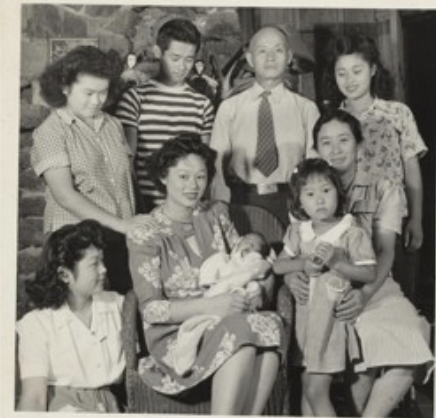
    The Yamasaki family from Granada Relocation Center pose for their picture

    When photographing, it was important for Dorothea Lange to be able to show democracy, total representation of all citizens, according to Linda Gordon’s “Dorothea Lange, A Life Beyond Limits.  Lange photographed many families throughout World War II, so their stories would not remain untold. One image this is prevalent in is her image titled The Yamasaki family from Granada Relocation Center pose for their picture, as this image depicts three generations of the Yamasaki family who were evacuated to the Granada Relocation Center. This photo demonstrates Lange’s idea of democracy because at first glance, this seems like an ordinary family, trying to make the most of the situation they are in. But this image also acknowledges the families’ hardships as a representation of all the suffering families at this time. Lange “believed that an imagery of democracy could contribute to building political democracy and… an active democratic citizenship,” and this photograph reflects that belief by giving visibility and respect to those the government tried to silence by forcing them to leave their homes (Gordon, Intro, last page). Through her respectful portrayal of the Yamasakis, Lange photographs them in the same way she would photograph any other family of every culture, reminding viewers that equality depends on acknowledging each person’s value and individuality.

    Another aspect of Lange’s identity and location that influences this photo is motherhood. Although her own experience with motherhood was complex and at times conflicted, it deeply informed the empathy and passion in her work. The theme of family and motherhood is very prevalent in this image as it demonstrates the Yamasaki family’s close bond and caring relationship. Similar to Lange’s family, even though they faced rough times, they remained resilient and cared for each other, which impacted her photography.

    Furthermore, Coles reflects on Lange’s photography, noting that her pictures “would make the particular universal that would bring us within a person’s world rather than keeping us out” (Coles 104-106). This idea is seen through Lange’s image of the Yamasaki family as she uses one family’s experience, turning it into a personal story that can resonate with many people and families, humanizing their experience and hardships. Without her work, the story of this family and their strength and connection would not have been shown, and inspired the lives of so many people.

  • Blog Post #3: Tensions in Stranger with a Camera

    A moment from Stranger with a Camera that stuck out to me was at 12:34 when Barret, the filmmaker, stated that she acknowledged she was well-off compared to many of those in her community and those she documents. This caught my attention as it reminded me of Coles’ theory of location and showed her position in relation to the documentary and how that shapes the story she is telling. This moment reveals tension as her differing location and viewpoint may affect what she chooses to document versus what she chooses to exclude. By outwardly stating her position and its contrast to the position of many in her community, Barret recognizes her own biases and engages in self-scrutiny, bringing awareness of the influence this has on her work and how audiences will engage with it, which is a way she tries to grapple with the tensions the differing positions can cause.

    Similarly, Robert Coles reflects on a conversation he had with Dr. Kenneth Clark, where he invites Coles to recognize that his privileges give him a sense of protection and bias. Clark explains to Coles that if he were Black and poor, he would have a different point of view on his documentary work and subject. Coles then states, “There I was, in pursuit of some objective truth, so I thought…”, showing recognition of his position, privilege, and how his background influences his work (61). Both Coles and Barret explicitly state their privilege compared to those around them and the impacts and tensions it can bring to their work.

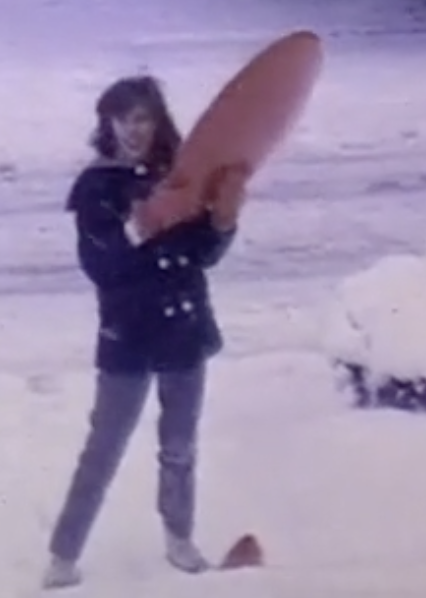
    Something Barret does to try to combat this tension throughout the film is by addressing the ethical problems that can result when documenting poverty, as seen at 31:00. At this moment, she recognizes there is a problem and wonders “what could have been done differently to show the problem”, without physically seeing the struggling people in hopes of limiting their embarrassment. (Barret 31:24). She understands the shame that may be accompanied by how their living conditions are shown and the backlash from audiences that they can experience. By reflecting on these issues and questions within film, Barret demonstrates that although she has a differing location from her subjects, she acknowledges their challenges and the tensions involved, aiming to represent them respectfully.

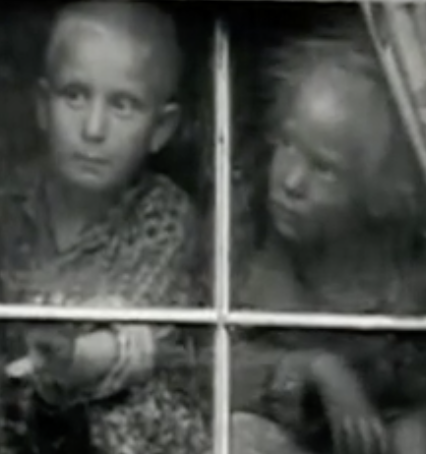
    the picture on the left shows Barret as a child, being able to enjoy the snow vs this picture of the kids she is documenting as they are stuck inside and look malnurished. This shows the differing locations between the subjects and the filmmakers which is the basis for one of the tensions in the film.
  • Blog Post #2: Cole’s Idea of Location

     In Cole’s first chapter, Robert Coles talks about an encounter he had with Bob Moses, the leader of the Student Nonviolent Coordinating Committee, when Coles volunteered with Moses to document the Civil Rights movement in the South. While together, Moses explains and states “ So, it’s location, man, location, for us: where we’re at, and where you’re at, and where we can do, and where we can’t go- that’s why I favor stopping to look at one person, then the next…” (30) In this quote, Moses is describing that location goes far beyond just a physical place but rather involves the people around us and our connections with them. Location can also include our varying perspectives, our past experiences that help shape our perspectives. Location is also constantly changing based on our current experiences that shape us and our beliefs. This idea relates to one of Cole’s ideas in the introduction that location or the “field” of documentary is an “ever-changing entity” and constantly evolving (13).

    This reminds me of when I moved away for college last year. For the first half of my first semester, I didn’t feel at home at Muhlenberg. I remember sobbing all of move-in day, scared of this unknown place and lifestyle I was about to begin. All the people and places I considered home were 2 and a half hours away in Baltimore, leaving me to feel lonely and lost. Over time, I started to feel more comfortable at Muhlenberg, creating a routine that I got comfortable with and gaining genuine friendships that felt similar to those back at home. Over time, Muhlenberg has begun to feel like another home for me and a place that I love with people and things that I love. My new experiences and the new people around me have shifted my perspective of Muhlenberg from being a place of unknowns and fears to a place full of joy and love. Over time, my location and my perception of it began to change, just as Moses and Coles talk about. My experience with Muhlenberg demonstrates that location is not fixed; it is constantly evolving and is defined by more than just the physical location.

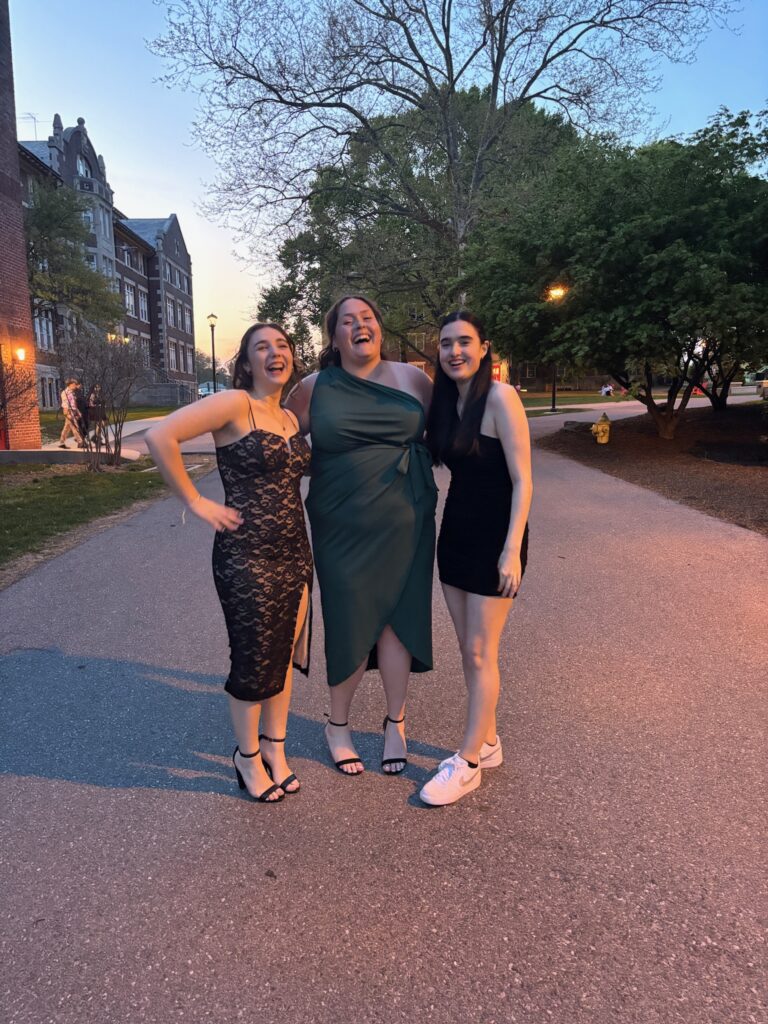
    Here are me and some of my friends back in Baltimore that I longed to be with those first weeks

  • Blog Post #1: A Move

    Coles refers to the field in documentary work as an “ever-changing entity”, meaning it is constantly changing and evolving (13). This correlates to the theme of home because I believe that home is a place or being surrounded by people that make you feel comfortable, and that is constantly evolving for some people. The documentary “A Move” focuses on Elahe Esmaili, a woman who returns to her hometown but no longer believes in some of her culture’s core beliefs, such as wearing a hijab. Cole additionally states that the field could be “an attitude towards the daily life that surrounds one,” which can be seen through Elahe’s persistence in standing up for what she believes in, refusing to cover her hair properly (14). Although her family and hometown were what Elahe considered home for much of her life, I feel that her place of home has now shifted to where she feels comfortable expressing herself in her own way and being around people who support her in doing so. This can be seen with her relationship with Mr. Hossein, who allows her to dress “however [she] wants to be” and express herself fully without succumbing to cultural norms and familial traditions. I predict that Elahe feels more at home around Mr. Hossein as he does not force a religion on her that she does not connect with, unlike her family. As soon as Mr. Hossein reveals to Elahe that he is open to her own beliefs, even those that do not align with his own, there is a shift in her tone and demeanor that becomes more positive and energetic. As I was watching the documentary, as soon as he revealed this information, I could send a release of tension from Elahe as she finally felt seen and accepted for who she truly is, without needing to compromise her beliefs or identity to please others. Below is the scece I am referencing:

    Elahe Esmaili, “A Move”, New York Times

    Elahe’s home is constantly changing and evolving as her beliefs and passions also change and grow, supporting Coles’ idea that the field is not static but constantly changing by the experiences and choices made within it.